


- Home
- Research
Research outputs
Global Research and Technology Development funds research and innovation that helps tackle global challenges, inform policy and deliver impact at scale.
Working through UK and international partnerships, we support evidence, technologies and innovations that contribute to a world free from poverty on a liveable and safer planet.
Our research
GRTD commissions large, high-impact research programmes that respond to global challenges and are aligned to UK international priorities, generating and synthesising rigorous evidence on what works in policy, practice, and implementation, developing innovations and technologies that address real-world challenges, supporting the uptake of research into scalable policy, programmes, and investment decisions, and enabling evidence and innovation to be used at scale by governments, investors, and international partners to deliver sustainable impact.
This page will bring together GRTD research products. You can search historic GRTD-funded research outputs through:
- FCDO’s Research for Development Outputs
- Knowledge for Development and Diplomacy (K4DD)
- Mapping ODA Research and Innovation (MODARI)
Research outputs may also be available through partner websites, such as the RCC’s page, publisher platforms and thematic or regional evidence portals. FCDO-funded research outputs and publications are made openly and immediately available in line with FCDO’s Open Access policy. Find our latest publications below.
Publications
Find the latest reports, papers, briefs and analysis.
New Frontiers of Conflict: Pathfinding Paper 3 | Knowledge production ecosystems in fragile and conflict-affected settings
Part of the FCDO-funded New Frontiers of Conflict Pathfinding Papers series, this paper examines knowledge production in fragile and conflict-affected settings across regions, including the Red Sea, Horn of Africa, Middle East and Ukraine. It identifies the diverse actors and outputs shaping knowledge ecosystems, and outlines priorities for more inclusive, locally grounded research practices.
New Frontiers of Conflict: Pathfinding Paper 2 | Trajectories Out of Conflict
Part of the FCDO-funded New Frontiers of Conflict Pathfinding Papers series, this paper examines pathways out of conflict across regions, including the Red Sea, Horn of Africa, Middle East and Ukraine. It highlights how most post-war transitions reduce violence without resolving underlying drivers, identifies conditions that support durable peace, and sets out key pressures that undermine sustainable transitions and outlines areas for further research on conflict recovery, governance, and evolving peacebuilding dynamics.
New Frontiers of Conflict: Pathfinding Paper 1 | Drivers of Conflict
Part of the FCDO-funded New Frontiers of Conflict Pathfinding Papers series, this paper examines evolving drivers of conflict across fragile regions, including the Red Sea, Horn of Africa, Middle East and Ukraine. It identifies five changing and four new drivers and highlights how they interact across scales to intensify instability. It outlines key priorities for further research to better understand emerging conflict dynamics.
Applied behavioural science start up pack
A comprehensive review to explore how the Technology and Innovation Unit (TIU) at the FCDO and its use of behavioural science can enhance the effectiveness of technology-driven interventions in low- and middle-income countries.
Joining the Dots: Learning From 15 Years of Research on Service Delivery in Situations of Fragility, Conflict and Violence
A significant body of research on service delivery in situations of fragility, conflict and violence has been built over the last 15 years but there has been limited synthesis of findings across research programmes and sectors. A virtual webinar in December 2025 and an in-person workshop held at the Institute of Development Studies (IDS) in January 2026 brought together researchers, practitioners and policymakers to break down the sectoral silos around key findings from this research.
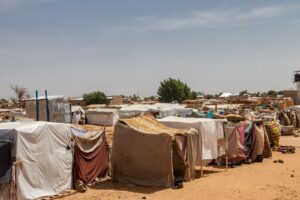
The Impact of Conflict and Displacement on Sudanese Refugee Women in Eastern Chad
This publication presents the main findings from research focusing on the situation of Sudanese refugee women and girls in four refugee camps in eastern Chad. The research finds critical gaps in aid provision, protection and gender-sensitive programming and demonstrates that the infrastructure in place is not currently gender responsive. The humanitarian response remains severely underfunded, further exacerbating these challenges and limiting support and opportunities for those in need
Evidence Mapping of Social Sciences Methods Used in Fragile and Conflict-Affected Settings (FCAS) (2015–2025)
This report examines how researchers design and implement methodological approaches in contexts marked by instability, insecurity, and institutional fragility. Drawing on 5,327 studies identified through a comprehensive mapping process, it analyses patterns in data collection, research design, analytical techniques, sectoral focus, and geographic distribution, revealing both dominant practices and critical gaps in the evidence base. Findings from this work will inform future research commissioning, highlight opportunities for methodological innovation, and support more context-appropriate, rigorous, and policy-relevant evidence generation in FCAS environments.
Delivering research programmes in FCAS: Summary of lessons learned
Throughout 2024-2025, the Research Commissioning Centre (RCC) completed several lines of work to support FCDO’s aim of delivering effective research programmes in fragile and conflict-affected settings (FCAS). This document summarises the main lessons from these different areas of work, in the interest of providing a concise presentation of these lessons and capturing the most important actionable insights.
Adopting a behavioural science lens in the Foreign, Commonwealth and Development Office’s technology and innovation investments
This portfolio review addresses a critical gap in understanding where and how behavioural science is currently applied across TIU’s technology and innovation investments, identifies barriers to systematic implementation, and develops practical tools to support more consistent integration of behavioural insights into programme design and delivery, with the goal to transform behavioural science into a core enabler of inclusive, sustainable innovation, strengthening FCDO’s global leadership and improving development outcomes.
The use of artificial intelligence in food and agriculture systems: State of the art
This report provides a comprehensive overview of the current use of artificial intelligence in agriculture, highlighting key applications, challenges, and opportunities for equitable and effective adoption in low- and middle-income countries.
The use of artificial intelligence in food and agriculture systems
Agriculture is vital to food security and economic growth in low- and middle-income countries (L&MICs), yet faces persistent challenges such as climate variability, limited land, and delayed crop disease detection. The use of artificial intelligence in food and agriculture systems: a rapid review report commissioned by the Research Commission Centre (RCC) of FCDO and 3ie seeks to develop a comprehensive understanding of the effectiveness and the social and equity implications of AI-enabled solutions in agriculture.
Evaluation of the climate change impact on rail operations in Türkiye
This project, “Evaluation of the climate change impact (CCI) on rail operations in Türkiye,” focuses on conducting a comprehensive assessment of how climate change affects railway infrastructure, maintenance, and operations in Türkiye through systematic literature review, stakeholder engagement, and vulnerability analysis of critical rail corridors. The study examines climate-induced hazards, including floods, heatwaves, landslides, and sea-level rise, while evaluating both mitigation strategies (such as modal shift to rail transport) and adaptation measures (including innovative monitoring technologies and resilient infrastructure design) to enhance railway resilience. Findings from this study will inform policymakers in strengthening Türkiye’s rail infrastructure resilience, aligning with the country’s goal of achieving net-zero emissions by 2050, while supporting national efforts to develop climate-resilient transportation systems and contributing to global knowledge on railway adaptation to climate change.
The health impact of investments in vertical programs and broader health system development: findings from Malawi
Using a dynamic microsimulation model of Malawi’s healthcare system, the research project shows the independent and combined health impacts of national-level investments in vertical scale-up programs for HIV, Tuberculosis, and Malaria (HTM), and investments in broader health system development in Malawi.
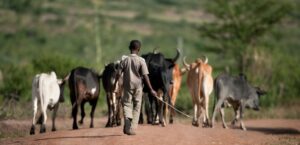
Supporting pastoralism and agriculture in recurrent and protracted crises
Ensuring resilience in the face of climate change, conflict, and socioeconomic instability is a central goal of global development policy. This report systematically maps the literature on the effectiveness of interventions to promote resilience and food security in the Middle East, Sahel, and Horn of Africa Regions. The report finds an uneven distribution of evidence across countries, interventions, and outcomes. The report offers several recommendations for additional research to probe evidence gaps.
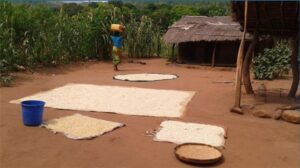
Improving food security and livelihoods through interventions to reduce postharvest losses in sub-Saharan Africa and South Asia
Significant crop losses at and after harvest continue to undermine food security and livelihoods. This project identifies evidence-based strategies to reduce postharvest losses of key food crops through a systematic scoping review and in-country consultations.
Mapping the shadow economy: A systematic review of shadow economy measurement methods and policy measures in Baltic States, Cyprus, Georgia, Malta and Moldova
This FCDO RCC-supported project examines how governments in the Baltic States, Cyprus, Georgia, Malta, and Moldova can better measure and reduce informal economic activity. Through systematic reviews and stakeholder engagement, the project explores evidence-informed approaches to strengthening formal economic participation and public trust.
Understanding evidence use in policymaking in Sub-Saharan Africa and South Asia
The use of evidence in policymaking has significant implications for sustainable economic development, affecting governance, growth, and societal outcomes. A new research programme supported by the FCDO’s Research Commissioning Centre is examining how policymakers engage with evidence, and what influences evidence uptake in Sub-Saharan Africa and South Asia, aiming to strengthen policymaking processes.
Effects of El Niño and the positive Indian Ocean Dipole (+IOD) on health, food security, economics and conflicts in low- and middle-income countries in the Indo-Pacific: A systematic review brief
This report outlines key lessons learned for designing and delivering effective research in fragile and conflict-affected settings, with a focus on flexibility, local ownership and practical implementation.
Effects of El Niño and positive Indian Ocean Dipole on health, food security, migration, economics, and conflicts in the Indo-Pacific: Protocol
This protocol outlines a systematic review of how El Niño and the positive Indian Ocean Dipole (+IOD) affect health, food security, economic outcomes, migration, and conflict in Indo-Pacific low- and middle-income countries. It sets out a rigorous and transparent methodology for identifying, assessing, and synthesising evidence, with the aim of generating robust, policy-relevant insights on the wider impacts of climate variability and supporting more effective resilience and adaptation strategies.
Research news
Explore the latest updates, insights and stories from GRTD-funded research.
Introducing OASIS: an open home for AI in international development
The Frontier Tech Hub is launching OASIS: a shared, open platform for AI in development. It's a place to find tools other people have built, discuss what's working, and build on it rather than starting…
Beyond the Axis: the evolution of Iran’s ‘Axis of Resistance’
Beyond the Axis is part of the Cross-border Conflict Evidence Policy and Trends (XCEPT) programme. The project set out to understand how Iranian arms transfers to allied groups has changed over time, and was ultimately…
Delivering clean energy access at scale through innovation
TEA is the flagship FCDO research and innovation platform supporting early-stage testing and scale up of innovative clean energy technologies and business models in developing countries, targeting the 655 million people still without access to…
Banner image: LSTM students look through microscopes in the LSTM teaching lab; ©Will Crowne/ DFID