RIDE: generating evidence for sustainable transport in developing economies
A major new international research and policy partnership is helping to shape the future of sustainable transport across low and middle-income countries.
Launched during the first UN Decade of Sustainable Transport events in New York in late 2025, Research on Infrastructure in Developing Economies (RIDE) brings together the UK Foreign, Commonwealth & Development Office (FCDO), the UK Department for Energy Security and Net Zero (DESNZ), Germany’s BMZ, Canada’s International Development Research Centre (IDRC) and the Shell Foundation. The programme is delivered through a partnership with GIZ, the World Resources Institute (WRI), the UK’s Transport Research Laboratory (TRL) and a network of eight world leading UK universities led by Durham University. (Transport Research into Practice, TRiP). RIDE works closely with multilateral development banks and is exploring a potential contribution to the World Bank’s Global Facility for Decarbonising Transport (GFDT).
RIDE aims to generate the evidence, innovation and partnerships needed to support cleaner, safer and more resilient transport system investments for increased trade and inclusive growth. Central to the programme is a focus on transport decarbonisation, women’s economic empowerment, climate resilience, AI, inclusive mobility and the mobilisation of finance for sustainable infrastructure.
The programme arrives at a critical moment. Transport accounts for around 20 per cent of global carbon emissions and many countries face growing challenges from climate change, congestion, air pollution and underinvestment in infrastructure. As highlighted at the World Bank and WRI’s Transforming Transportation conference in Washington D.C., sustainable transport is increasingly recognised as a key enabler of economic growth, resilience and social inclusion. The conference also saw the launch of the Transport Global Intelligence System (TGIS), a new AI-enabled platform initiated by FCDO under RIDE to strengthen the evidence base for sustainable transport decision-making.
Through its research and innovation agenda, RIDE will help countries identify practical pathways towards low-carbon transport transitions, improve access to finance, and strengthen the links between research, policy and implementation. The programme’s growing knowledge library already showcases work on topics ranging from transport emissions and public transport accessibility to climate finance and infrastructure resilience. Recent features include Beyond the Tailpipe: Asia’s Evolving Transport Emissions Challenge, Affordable and Accessible Public Transportation, and Asian Transport 2035 Outlook: Investment Needs of Low- and Middle-Income Economies.
The Transport Innovation Hub, co-funded by FCDO and Shell Foundation, forms a key part of the RIDE programme. The Hub is designed to accelerate the development and uptake of innovative approaches, including digital tools, AI and open data solutions, to support more sustainable transport systems and faster progress towards climate and development goals.
As momentum builds around the UN Decade of Sustainable Transport, RIDE represents a significant investment in global knowledge, innovation and collaboration. By bringing together governments, researchers, development partners and the private sector, the programme will help ensure that transport systems support economic opportunity while contributing to a cleaner, more resilient future.
Keep informed about their progress by subscribing via the form on their website (scroll to the end).
See more
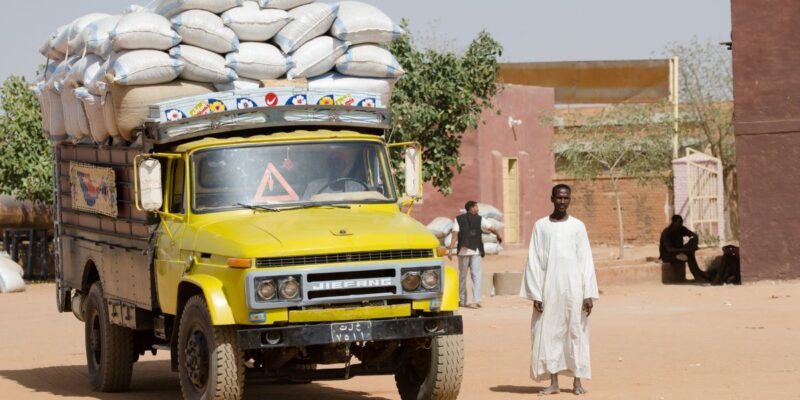
RIDE: generating evidence for sustainable transport in developing economies Share Post : Scene from Al Nnuhoud Crop Market, North Kordofan, Sudan. Photo: Salahaldeen Nadir / World Bank A major new international research and policy partnership is helping to shape the future of sustainable transport across low and middle-income countries. Launched during the first UN Decade […]
Two decades of research: the Young Lives study
Young Lives is a unique longitudinal research programme that has followed 12,000 young people in Ethiopia, India, Peru and Vietnam – from infancy to adulthood – for more than 2 decades.
Lessons from the frontier of AI in international development
Artificial intelligence is often presented as a new frontier for international development. But the Frontier Tech Hub’s 4-part newsletter series, On the Frontier of AI, tells a more grounded and useful story: AI is not new, not only about large language models, and not useful unless the right data, infrastructure, institutions and safeguards are in place.
The Unlocking Resilience through Bottom-up Action-Research and Multi-Scalar Networks (URBAN) project tested how locally led climate adaptation and political-economy analysis can move from evidence into planning, resources and policy influence.