
PeaceRep predatory peace research reaches the ICC
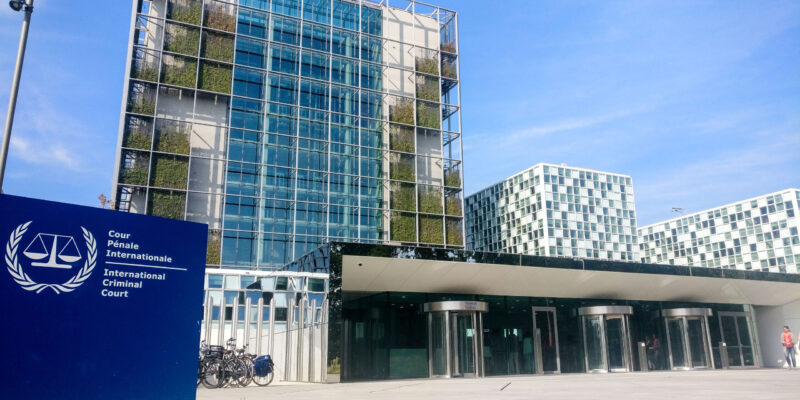
In October 2025, former Janjaweed militia commander Ali Muhammad Ali Abd-Al-Rahman (‘Ali Kushayb’) was convicted by the International Criminal Court in The Hague of 27 counts of crimes against humanity and war crimes committed in Darfur, Sudan, between August 2003 and April 2004. In December 2025, he was sentenced to 20 years’ imprisonment.
As the Court now considers reparations for the victims, research on predatory peace from the GRTD-funded Peace and Conflict Resolution Evidence Platform (PeaceRep) programme has been presented to the Court as expert economic evidence, offering recommendations on how to proceed with reparations during active conflict.
PeaceRep is a research consortium led by the University of Edinburgh Law School and funded by GRTD from 2021 to 2027. Combining data-driven insights with country expertise, PeaceRep’s research is rethinking peace and transition processes in the light of changing conflict dynamics, new demands for inclusion, and shifting patterns of global intervention. In Sudan, PeaceRep research has explored the concept of ‘predatory peace’: how settlements and external interventions can legitimise wartime extraction by embedding it within formal post-war fiscal orders.
At a hearing on 8 September 2026, ICC Trial Chamber I heard submissions on reparations-related issues, an important step towards redressing harms perpetrated in Darfur. Former PeaceRep researcher Dr Matthew Benson-Strohmayer drew on his research into predatory peace to present evidence on how reparations can reach some 3.5 million victims of atrocities in Darfur while Sudan is still at war.
Dr Benson-Strohmayer first brought this evidence to the Trial Chamber in June 2026 in a friend of the court (amicus curiae) submission. The submission draws on an economic report co-authored by Dr Benson-Strohmayer and Tahany Maalla, an independent Sudanese expert. Building on survivor-led research, it asks not only what reparations are owed, but how they can reach victims now without being captured by the same networks that sustain Sudan’s war economy. The filing describes the joint report as ‘centrally contributing’ to its observations.
The authors’ proposed reparations framework is designed to work around, and avoid reproducing, Sudan’s predatory political economy, in which war remains profitable. They recommend proceeding with reparations during active conflict, using service-based provision through accountable humanitarian and civic networks, with safeguards against capture.
The evidence presented to the Trial Chamber draws on several PeaceRep outputs, including Of Rule Not Revenue: Predation, State-Unbuilding, and Conflict in Sudan and South Sudan, 1821–2023, for Cambridge University Press; ‘Predatory Peace: Fiscal Fragmentation and Coercive Statebuilding in South Sudan and Beyond’ in the Journal of Intervention and Statebuilding; ‘Of Rule Not Revenue: South Sudan’s Revenue Complex from Colonial, Rebel, to Independent Rule, 1899 to 2023’ in Comparative Studies in Society and History; and ‘Revenue, Resistance, and Rule: Civic Fiscal Resistance and Statebuilding in Sudan, 1953–2023’, revised and resubmitted to Development and Change.
The Trial Chamber has since requested additional submissions on the cost of repairing the harm caused, and is expected to issue a Reparations Order and implementation plan in due course.
See more
Elementor #9609
PeaceRep predatory peace research reaches the ICC Share Post : The International Criminal Court, The Hague. Photo by jbdodane. In October 2025, former Janjaweed militia commander Ali Muhammad Ali Abd-Al-Rahman (‘Ali Kushayb’) was convicted by the International Criminal Court in The Hague of 27 counts of crimes against humanity and war crimes committed in Darfur, Sudan, […]
Rare earth extraction in Myanmar-China borderlands is reshaping conflict and development
A new SOC ACE paper by Dr Patrick Meehan, Dan Seng Lawn, Dr Xu Peng and Professor Jonathan Goodhand traces how heavy rare earths from Kachin State in Myanmar feed China-centred and global supply chains with little local processing, while the environmental and social costs stay where the mining happens.
How do we know if research is used in policy? Practical lessons for monitoring and learning
Tracking research’s real-world influence is difficult, and resources are tight. This blog shares emerging lessons from a workshop convened by the GRTD Research Commissioning Centre (RCC) for funders and practitioners.
Can AI help crack your global health research question? Apply for a guided AI co-scientist sprint
Research teams tackling global health challenges can now test artificial intelligence (AI) co-scientist tools on their own research questions, through guided sprints funded by the UK Foreign, Commonwealth & Development Office (FCDO) and delivered by PATH.