Rare earth extraction in Myanmar-China borderlands is reshaping conflict and development
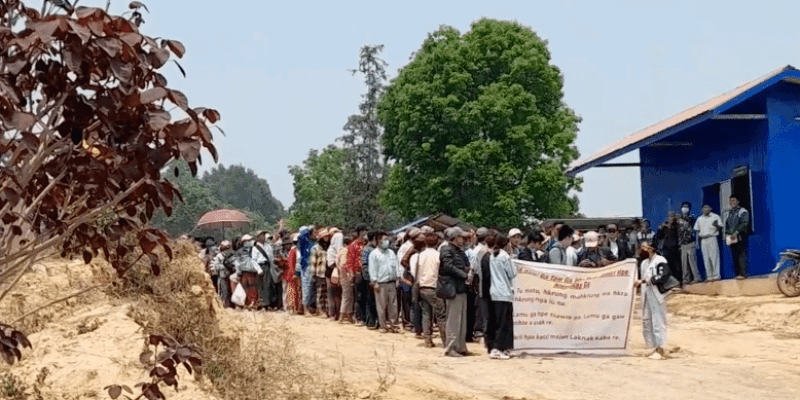
A new research paper examines how rare earth extraction in northern Myanmar connects a conflict-affected borderland to global critical mineral supply chains, and why efforts to secure these minerals must also address environmental harm, local livelihoods and political violence.
In Contested Rare Earth Frontiers in the Myanmar-China Borderlands: Extraction, Conflict and Uneven Development, Dr Patrick Meehan (The University of Manchester), Dan Seng Lawn (Kachinland Research Centre), Dr Xu Peng (The University of Manchester and SOAS University of London), and Professor Jonathan Goodhand (SOAS University of London) investigate the rare earth corridor linking Kachin State in Myanmar with Yunnan Province in China. The paper draws on fieldwork and archival research in Chinese, Burmese and Jinghpaw.
The authors show that since the mid-2010s, Kachin State has become one of the world’s most significant sources of heavy rare earths. These minerals are essential to technologies including wind turbines, electric vehicles and advanced electronics. The material extracted in Kachin is mainly exported with little local processing, feeding China-centred manufacturing systems and wider global supply chains. Meanwhile, the environmental and social costs of mining remain concentrated in the areas where extraction takes place.
The research forms part of the Serious Organised Crime & Anti-Corruption Evidence (SOC ACE) research programme. The project, The Centrality of the Margins: Borderlands, Illicit Economies and Uneven Development, examines how conflict-affected borderlands connect to wealth accumulation and development in metropolitan centres. The UK government’s Foreign, Commonwealth & Development Office (FCDO) funds SOC ACE through its Global Research, Technology and Development (GRTD) portfolio.
What the research finds
The paper makes three main arguments:
- Borderlands are central, not marginal, to to global production networks. Kachin State has become strategically important to China’s rare earth industry and to wider critical mineral supply chains. It is not simply a remote source of raw materials, but a place where sovereignty is negotiated, economic value is extracted and political authority is contested.
- Harm reflects integration, not isolation. The concentration of violence, environmental degradation, poverty and illicit activity in northern Myanmar reflects the region’s incorporation into Chinese and global political economies, rather than its isolation from them. Rare earth extraction channels value outwards, while environmental destruction, insecure work and threats to livelihoods remain local. Fragmented authority, weak regulation and legal uncertainty can also allow extraction to continue while responsibility for its impacts is passed between different actors.
- Local politics shapes extraction. In northern Myanmar, mining is connected to war economies, armed governance, cross-border brokers, livelihood strategies and struggles over land, legitimacy and territorial control.
Conflict and control of mining areas
The research focuses particularly on developments since late 2024, when the Kachin Independence Army (KIA), the armed wing of the Kachin Independence Organisation, took control of the major rare earth mining areas as part of wider territorial gains against Myanmar’s military.
This change exposed the competing pressures involved in sustaining extraction. These include financing wartime activity, consolidating territorial control, negotiating with China, responding to border restrictions, mobilising labour, supporting local livelihoods and maintaining legitimacy among communities.
The authors show that mining cannot be understood as only a technical or commercial activity. It is also shaped by armed conflict, local political relationships and the wider systems of trade, logistics, regulation and power that connect mining sites in Kachin State to Yunnan and beyond.
Implications for policy
The paper argues that reducing harm in critical mineral frontiers requires more than technical regulation or a narrow focus on supply security. Due diligence systems and policy responses need to take account of political and territorial conditions, the networks through which minerals move, land rights and people’s dependence on mining-related livelihoods.
The research also highlights the need to look beyond the location where minerals are extracted. Policies should consider how value, risk and responsibility are distributed across cross border supply chains, and how local communities experience changes in access to land, work and natural resources.
A genuinely just transition, the authors conclude, must consider not only how strategic minerals are secured for clean-energy and technology supply chains, but also the social, political and environmental relationships created or reinforced through their extraction.
Read the full paper: Contested Rare Earth Frontiers in the Myanmar China Borderlands: Extraction, Conflict and Uneven Development
Learn more about the SOC ACE research programme.
The views expressed are those of the authors and do not necessarily reflect the UK government’s official policies.
See more
Rare earth extraction in Myanmar-China borderlands is reshaping conflict and development
A new SOC ACE paper by Dr Patrick Meehan, Dan Seng Lawn, Dr Xu Peng and Professor Jonathan Goodhand traces how heavy rare earths from Kachin State in Myanmar feed China-centred and global supply chains with little local processing, while the environmental and social costs stay where the mining happens.
How do we know if research is used in policy? Practical lessons for monitoring and learning
Tracking research’s real-world influence is difficult, and resources are tight. This blog shares emerging lessons from a workshop convened by the GRTD Research Commissioning Centre (RCC) for funders and practitioners.
Can AI help crack your global health research question? Apply for a guided AI co-scientist sprint
Research teams tackling global health challenges can now test artificial intelligence (AI) co-scientist tools on their own research questions, through guided sprints funded by the UK Foreign, Commonwealth & Development Office (FCDO) and delivered by PATH.
How AI can help survivors in low-resource settings access justice
Justice systems in low-resource and conflict-affected settings are often stretched to breaking point. In Malawi, for example, fewer than 800 lawyers serve a population of 22 million, and legal aid caseloads run into the tens of thousands