The use of artificial intelligence in food and agriculture systems
Project overview
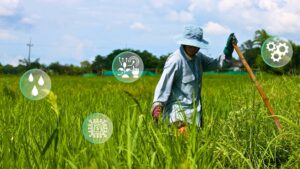
Agriculture is vital to food security and economic growth in low- and middle-income countries (L&MICs), yet faces persistent challenges such as climate variability, limited land, and delayed crop disease detection. The use of artificial intelligence in food and agriculture systems: a rapid review report commissioned by the Research Commission Centre (RCC) of FCDO and 3ie seeks to develop a comprehensive understanding of the effectiveness and the social and equity implications of AI-enabled solutions in agriculture.
Drawing on evidence from 51 peer-reviewed and grey literature studies, the rapid review found that while AI holds significant promise for enhancing productivity and resilience, its adoption is constrained by underrepresentation of vulnerable populations, digital divides, socio-economic barriers, and scepticism toward new technologies.
The state of art report focuses on examining the current state, potential, and challenges of artificial intelligence (AI) adoption in agriculture, with particular emphasis on low- and middle-income countries (L&MICs). It explores AI’s applications across the agricultural value chain ranging from crop production and pest detection to predictive analytics and climate-smart solutions while assessing its effectiveness, ethical considerations, and equity implications.
The findings will inform future research priorities, policy development, and funding strategies to promote inclusive, ethical, and scalable AI solutions that address the unique agricultural challenges faced by L&MICs, ensuring benefits for smallholder farmers and promoting sustainable, equitable agri-food systems.